Facebook Ads vs Instagram Ads: Which Platform Is Better for Your Business in 2026?
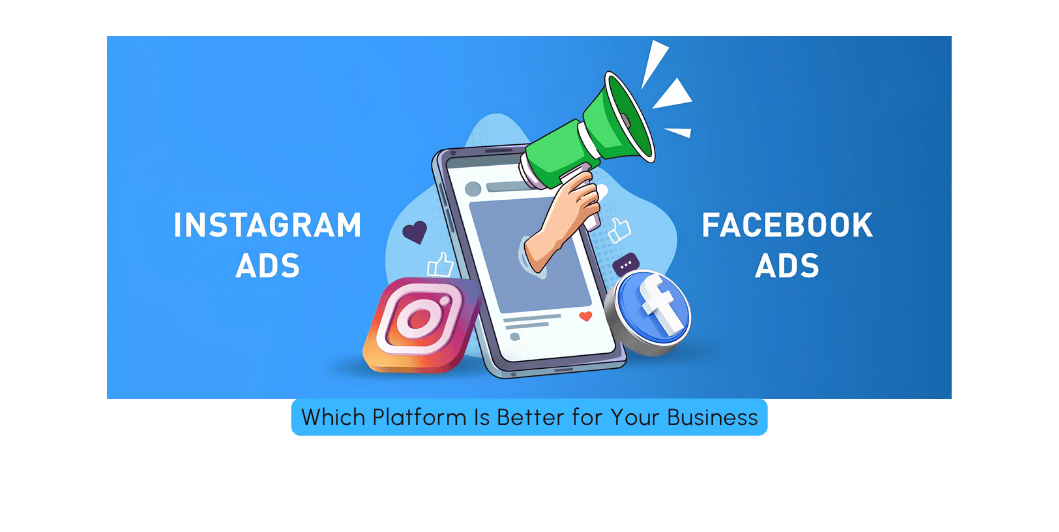
Facebook Ads vs Instagram Ads is an important comparison for small businesses planning to invest in paid social media marketing. Both platforms can help businesses reach potential customers, generate leads, increase website traffic, promote products, and build brand awareness. However, the best platform depends on your audience, industry, advertising objective, creative strategy, and conversion process.
For businesses in India, choosing the right advertising placements can make a meaningful difference to campaign performance. A local showroom may need enquiries and test rides, an online store may want purchases, and a professional service provider may want qualified leads.
The good news is that businesses do not always need to choose one platform exclusively. Facebook and Instagram advertising can be managed together through Meta’s advertising system, allowing advertisers to test placements and evaluate which combinations deliver useful results.
In this guide, we will compare Facebook Ads and Instagram Ads, explain their strengths, explore industry-specific use cases, and show you how to decide where to invest your advertising budget.
Quick Answer: Facebook Ads vs Instagram Ads
There is no universal winner between Facebook Ads and Instagram Ads.
- Facebook Ads can be useful for community-oriented businesses, local services, detailed information, certain lead-generation campaigns, and audiences that actively use Facebook.
- Instagram Ads can be particularly suitable for visual brands, fashion, food, lifestyle, beauty, travel, product demonstrations, and short-form video campaigns.
- Both platforms together can help businesses reach people across multiple placements and test where their advertising performs best.
These are starting assumptions, not fixed rules. Actual results depend on the audience, offer, creative, campaign objective, placement, and conversion experience.
| Comparison factor | Facebook Ads | Instagram Ads |
|---|---|---|
| Main advertising strengths | Community, information, local discovery, multiple content formats | Visual storytelling, Reels, product discovery, lifestyle content |
| Common formats | Feed, Stories, Reels, video, carousel and other eligible placements | Feed, Stories, Reels, carousel and other eligible placements |
| Local business marketing | Useful for local offers, service information and community-focused campaigns | Useful for visually presenting services, products and experiences |
| E-commerce | Product discovery, catalogue advertising and retargeting | Product discovery, demonstrations and visual product promotion |
| Lead generation | Can support forms, messages and website enquiries | Can support forms, messages and website enquiries |
| Creative approach | Informative, community-focused, visual or video-based | Visual-first, mobile-friendly, video and creator-style content |
| Best choice | Depends on audience behaviour and campaign results | Depends on audience behaviour and campaign results |
Important: When advertising through Meta Ads Manager, Facebook and Instagram are placements within a broader advertising system. You can often select placements manually or allow eligible placements to be optimized automatically, depending on your campaign setup.
1. Understanding Facebook Ads
Facebook Ads allow businesses to promote content to selected audiences on Facebook and eligible placements across Meta’s advertising ecosystem.
Businesses can use Facebook advertising to promote services, showcase products, collect leads, drive website visits, encourage messages, and increase awareness.
Key benefits of Facebook Ads
1. Local business promotion
Facebook can be useful for businesses serving specific locations. A computer service provider, restaurant, dealership, coaching centre, or real estate agency can build campaigns around relevant service areas.
For example, a motorcycle dealership in Kolkata could promote test rides and showroom offers to eligible audiences in its service area.
2. Community-oriented marketing
Businesses can use Facebook content to communicate offers, events, announcements, customer stories, and useful information. This can complement a wider paid advertising strategy.
3. Multiple advertising formats
Depending on campaign eligibility and configuration, advertisers may use image ads, videos, carousels, lead forms, messaging destinations, and other formats.
4. Lead generation
Businesses that rely on enquiries can use lead-generation campaigns to collect customer information through supported forms or direct people to a website or messaging destination.
The quality of the leads still depends on the offer, audience, form questions, follow-up process, and customer intent.
5. Information-rich advertising
Facebook can be a practical option when a campaign needs to communicate several details, such as service inclusions, event information, product benefits, eligibility conditions, or an offer’s terms.
Read Also: Meta Ads Targeting: How to Reach the Right Audience
Example Facebook Ad
A local IT support business could run an advertisement promoting:
- Laptop and desktop troubleshooting
- Business IT support
- Networking solutions
- Software support
- Annual Maintenance Contracts
- A clear enquiry button
The advertisement could use a professional image or short video, explain the service area, and send interested users to a relevant landing page or messaging destination.
The objective should be to generate relevant enquiries, not simply accumulate likes.
2. Understanding Instagram Ads
Instagram Ads help businesses promote visual content through Instagram’s eligible advertising placements.
The platform is particularly useful when a business can demonstrate its products, services, experiences, or brand identity through attractive images and videos.
Key benefits of Instagram Ads
1. Strong visual storytelling
Instagram is well suited to businesses that can communicate value visually. Examples include restaurants, clothing brands, travel businesses, salons, gyms, interior designers, and motorcycle dealerships.
2. Reels advertising
Short-form videos can demonstrate products, explain services, show behind-the-scenes activities, and introduce a brand.
A motorcycle dealership could create a Reel showing a motorcycle’s design, riding features, showroom experience, or available colours.
3. Product discovery
Visual content can help potential customers discover products they were not actively searching for.
An online store, for example, could use a short video to demonstrate a product’s appearance, functionality, or practical benefits.
4. Brand personality
Instagram content can communicate a business’s style, tone, customer experience, and identity. Consistent creative execution can help audiences recognize the brand across campaigns.
5. Creator-style content
Authentic demonstrations, customer experiences, and creator-style videos can be useful advertising formats when produced honestly and with the appropriate permissions.
Example Instagram Ad
A restaurant could create a 15–30-second vertical video featuring:
- A close-up of a signature dish
- Food preparation footage
- The dining environment
- A clear location or booking message
- A suitable call to action
The video should communicate its main appeal quickly, especially when designed for mobile viewing.
3. Facebook Ads vs Instagram Ads: Audience Differences
One of the most important advertising decisions is understanding where your potential customers spend time and how they respond to content.
Do not assume that every Facebook user belongs to one age group or that every Instagram user belongs to another. Both platforms serve varied audiences, and user behaviour differs by location, interest, profession, and individual preference.
Instead, consider these questions:
- Which platform does your target customer use?
- What type of content attracts their attention?
- Are they discovering products, researching services, or actively looking to buy?
- Do they prefer watching videos, viewing product images, reading details, or sending messages?
- Can your campaign reach the right audience at a reasonable cost?
How to research your audience
Step 1: Review existing customers
Identify common characteristics among your best customers, including their location, needs, purchase behaviour, and reasons for choosing your business.
Step 2: Examine your organic social media results
Review which Facebook and Instagram posts receive meaningful engagement, profile visits, enquiries, or website traffic.
Organic performance does not guarantee paid performance, but it can provide useful creative ideas.
Step 3: Test both platforms
Where your campaign objective and budget allow, test Facebook and Instagram placements using comparable offers and creative concepts.
Step 4: Evaluate business outcomes
Measure qualified enquiries, purchases, bookings, and revenue rather than relying only on reach or engagement.
4. Facebook Feed vs Instagram Feed
Feed placements can be useful for both awareness and conversion campaigns. The best creative format depends on how your audience consumes content and what you are promoting.
Facebook Feed advertising
Facebook Feed ads can accommodate a variety of creative approaches, including informative images, videos, carousels, customer stories, and offer-focused content.
They may be useful for:
- Local service promotions
- Business announcements
- Event advertising
- Product collections
- Educational content
- Lead-generation offers
Creative tip: Make the main benefit clear, use readable text, and ensure the call to action is easy to understand.
Instagram Feed advertising
Instagram Feed ads are often well suited to visually appealing photography, product imagery, lifestyle content, carousels, and brand storytelling.
They may be useful for:
- Fashion and beauty products
- Restaurants and hospitality
- Interior design
- Travel experiences
- Product launches
- Brand-building campaigns
Creative tip: Use high-quality visuals that match your brand identity. Avoid overcrowding the image with text or adding unnecessary design elements.
5. Facebook Stories vs Instagram Stories
Stories can provide a more immediate, mobile-oriented way to communicate an offer or encourage action.
Depending on campaign eligibility and placement settings, advertisers may use image or video creative in Stories.
Facebook Stories
Facebook Stories can complement broader campaigns and help businesses reach audiences who use Facebook’s Stories experience.
Potential uses include:
- Local offers
- Event reminders
- Service promotions
- Product announcements
- Retargeting campaigns
Instagram Stories
Instagram Stories can be particularly useful for visual promotions, product launches, event highlights, limited-time offers, and behind-the-scenes content.
Potential uses include:
- New product announcements
- Restaurant promotions
- Appointment reminders
- Product demonstrations
- Special offers with clear terms
Stories advertising best practices
- Design for vertical mobile viewing.
- Show the main message early.
- Keep text short and readable.
- Use captions when dialogue is important.
- Make the call to action clear.
- Check that important text and visual elements are not obscured by interface elements.
- Preview the creative in the intended placement before publishing.
Do not assume that the same creative will work equally well in every placement. Test different formats where practical.
6. Facebook Reels vs Instagram Reels Ads
Short-form video can be valuable when the product or service benefits from demonstration, storytelling, or visual explanation.
Both Facebook and Instagram support Reels experiences, and eligible advertising placements can allow businesses to distribute vertical video creative across these environments.
When Facebook Reels may be useful
Consider testing Facebook Reels for:
- Local business awareness
- Product demonstrations
- Community-focused content
- Event promotion
- Customer stories
- Service explanations
When Instagram Reels may be useful
Consider testing Instagram Reels for:
- Fashion and lifestyle products
- Beauty demonstrations
- Food preparation
- Travel experiences
- Fitness content
- Product features
- Behind-the-scenes videos
These are creative hypotheses, not guaranteed platform advantages.
A simple Reel advertising structure
First 2–3 seconds: Hook
Show an interesting visual or state the customer’s problem.
Next 5–10 seconds: Demonstration
Show how the product or service works, or explain the main benefit.
Next 5–10 seconds: Supporting evidence
Use product details, genuine customer feedback, demonstrations, or relevant proof.
Final section: Call to action
Tell viewers what to do next, such as visiting the website, enquiring about a service, or booking a demonstration.
The exact duration should suit the message. A shorter video is not automatically better if it fails to explain the offer.
7. Which Platform Is Better for Lead Generation?
Both Facebook and Instagram can support lead-generation campaigns.
The better option depends on the audience, offer, form or landing page, and the process used to qualify and follow up with leads.
Facebook Ads for lead generation
Facebook may be worth testing when you want to promote:
- IT support services
- Real estate enquiries
- Coaching or training
- Local business services
- Event registrations
- Consultation bookings
Instagram Ads for lead generation
Instagram may be worth testing when your service can be communicated visually, including:
- Salon appointments
- Fitness consultations
- Interior design projects
- Wedding photography
- Fashion enquiries
- Restaurant bookings
However, neither platform is limited to these categories. The same business can test both.
Example: Generating leads for a service business
Suppose an IT support business wants to generate enquiries from small businesses in Kolkata.
A practical campaign could include:
- A clearly defined service area.
- An advertisement explaining the business problem it solves.
- A landing page or supported lead form.
- Questions that help qualify the enquiry.
- A clear privacy notice explaining how submitted information will be used.
- A reliable process for contacting leads.
- Tracking for qualified enquiries and completed sales.
The campaign should measure the cost of acquiring a genuine customer, not just the cost of collecting a phone number.
Read Also: Google Ads vs Meta Ads
Important lead-generation metrics
| Metric | What it tells you |
|---|---|
| Leads | Number of enquiries collected |
| Cost per lead (CPL) | Advertising spend divided by leads |
| Lead qualification rate | Percentage of leads that meet your criteria |
| Lead-to-customer rate | Percentage of leads that become customers |
| Customer acquisition cost (CAC) | Total relevant acquisition costs divided by new customers |
| Revenue | Sales generated from the campaign |
| Return on ad spend (ROAS) | Attributed revenue divided by advertising spend |
Example: If you spend ₹5,000 and collect 50 leads, your cost per lead is ₹100. If only five become customers, the campaign generated five customers—not 50.
To judge profitability, compare customer acquisition costs with the revenue and profit those customers generate.
8. Which Platform Is Better for E-commerce?
E-commerce businesses can advertise on both Facebook and Instagram, particularly when products benefit from visual demonstrations, product collections, and retargeting.
The ideal strategy depends on the product category, customer journey, average order value, margins, and website experience.
Facebook Ads for e-commerce
Potential uses include:
- Promoting product collections
- Advertising special offers
- Retargeting eligible website visitors
- Reaching potential customers
- Promoting products through catalogue-based formats where supported
Instagram Ads for e-commerce
Potential uses include:
- Product demonstrations
- Lifestyle imagery
- Short-form videos
- New product launches
- Visual collections
- Retargeting interested shoppers
How to measure e-commerce performance
Track more than clicks and add-to-cart events. Review:
- Purchases
- Purchase conversion rate
- Average order value
- Cost per purchase
- Customer acquisition cost
- Revenue
- ROAS
- Refunds and cancellations
- Contribution margin after relevant costs
For example, a campaign generating substantial revenue may still be unprofitable if product margins are low or acquisition costs are high.
WooCommerce tracking checklist
If your online store uses WooCommerce, check that:
- Purchase events are recorded correctly.
- Currency and order values are accurate.
- Duplicate conversion events are not inflating results.
- Consent and privacy requirements are addressed.
- Website analytics and advertising reports are interpreted appropriately.
- Test purchases are excluded from genuine sales reporting where necessary.
Meta Pixel and Conversions API may help with event measurement, but they do not eliminate every tracking limitation. Reported conversions may differ across analytics and advertising platforms.
9. Which Platform Is Better for Local Businesses?
Local businesses should focus on reaching relevant customers within their service area and turning that attention into enquiries, visits, bookings, or sales.
The platform should be selected based on the type of customer, creative opportunity, and measured results.
| Business type | Facebook creative to test | Instagram creative to test |
|---|---|---|
| Motorcycle dealership | Local offer, finance information, test-ride invitation | Cinematic motorcycle Reel, walkaround, feature demonstration |
| Restaurant | Menu highlights, event promotion, location-focused offer | Food photography, chef Reel, dining experience |
| IT support business | Service explanation, business support offer | Short troubleshooting or educational video |
| Real estate agency | Property details, location information, enquiry campaign | Property tour, interior video, project highlights |
| Coaching centre | Course information, admissions details | Classroom clips, course introduction, student activities |
| Salon or beauty service | Service packages, appointment campaign | Before-and-after content where appropriate, service demonstrations |
| Retail shop | Product offers, new arrivals, store information | Product showcases, styling ideas, unboxing videos |
These are starting points for creative testing. They do not mean that a particular business category will always perform better on one platform.
Example: A motorcycle dealership in Kolkata
A dealership could use a coordinated Facebook and Instagram campaign.
Campaign A: Awareness
Create short videos showing the motorcycle, riding experience, showroom environment, and local brand identity.
Campaign B: Test-ride enquiries
Promote a specific model and invite potential customers to enquire or schedule a test ride.
Campaign C: Retargeting
Where suitable audiences and consent settings permit, reconnect with people who have engaged with the business or visited relevant website pages.
Campaign D: Offer promotion
Communicate verified offers, eligibility, applicable dates, and terms clearly.
Measure qualified enquiries, test rides booked, showroom visits, and completed sales wherever the business can reliably track them.
10. Is Facebook Advertising Cheaper Than Instagram Advertising?
There is no fixed rule that Facebook Ads are always cheaper than Instagram Ads.
Advertising costs can vary according to:
- Audience competition
- Industry
- Location
- Campaign objective
- Creative quality
- Placement
- Time of year
- Conversion rate
- The value advertisers place on reaching a particular audience
A placement with a lower cost per click may still produce more expensive customers if those clicks do not convert.
Similarly, a higher cost per lead can be acceptable if the leads are more qualified and generate more sales.
Example budget comparison
Suppose a business allocates an illustrative ₹10,000 test budget.
It might compare Facebook and Instagram placements using a structured experiment, with the budget split according to the test design.
The business should evaluate:
| Measurement | ||
|---|---|---|
| Spend | Actual spend | Actual spend |
| Leads or purchases | Actual results | Actual results |
| Cost per result | Spend ÷ results | Spend ÷ results |
| Qualified lead rate | Qualified leads ÷ leads | Qualified leads ÷ leads |
| Customer acquisition cost | Relevant acquisition cost ÷ customers | Relevant acquisition cost ÷ customers |
| Revenue or sales value | Attributed results | Attributed results |
The table should be completed with actual campaign data. Do not assume a platform is the winner based on hypothetical numbers.
Testing note: A simple split within one campaign may not provide a perfectly controlled comparison. Auction delivery, audience overlap, placement optimization, and conversion attribution can affect results. For a more rigorous comparison, use a suitable controlled experiment when available.
11. Should You Advertise on Facebook and Instagram Together?
For many small businesses, testing both platforms is a sensible starting point.
Using Meta Ads Manager can simplify campaign management and allow advertisers to compare eligible placements. However, automatically distributing ads across placements does not guarantee that every placement will contribute equally or perform well.
Benefits of advertising across both platforms
Broader placement coverage
Your ads can appear in multiple eligible environments rather than relying on one placement.
Creative flexibility
You can test different formats, such as vertical videos, square images, carousels, and other suitable assets.
More opportunities to learn
Campaign reporting can help you understand where results are coming from, subject to available breakdowns and reporting limitations.
Retargeting opportunities
Suitable audiences may be used to reconnect with people who have previously interacted with your business, subject to platform availability and applicable privacy requirements.
When to use manual placements
Manual placement selection may be useful when:
- You have a specific placement strategy.
- Your creative is designed for only certain placements.
- You have enough data to justify excluding some placements.
- You need a controlled test.
- You have identified a genuine placement-specific performance problem.
Avoid excluding placements simply because you personally prefer one platform. Base decisions on evidence.
12. How to Split Your Advertising Budget
There is no universal budget split for Facebook and Instagram Ads.
Your allocation should reflect your objectives, customer behaviour, available data, and the quality of results.
Approach 1: Test broadly
If you have little previous campaign data, begin with a test that gives eligible placements a reasonable opportunity to generate results.
This can help you discover which audiences, creative formats, and placements deserve further investigation.
Approach 2: Allocate according to performance
Once you have sufficient reliable data, adjust your budget based on business outcomes.
Consider:
- Cost per qualified lead
- Customer acquisition cost
- Purchase conversion rate
- Revenue and profit
- Lead quality
- Frequency and creative fatigue
- Sales-team feedback
Approach 3: Separate campaigns when necessary
Separate campaigns or ad sets may be appropriate when you have distinct objectives, audiences, offers, or measurement requirements.
However, excessive fragmentation can make it harder to gather sufficient data. Keep the account structure as simple as your business needs allow.
Practical budget rules
- Define the campaign objective before allocating money.
- Decide what a valuable result means.
- Estimate an acceptable cost per customer or qualified lead.
- Set a realistic test budget.
- Allow enough time and data to assess performance.
- Avoid changing too many variables simultaneously.
- Increase spending only when results justify it.
- Monitor actual sales and profitability.
13. Creative Strategy: What Works on Each Platform?
Your advertising creative can matter as much as the platform you choose.
A strong creative communicates the value proposition, attracts relevant attention, and gives people a clear next step.
Facebook creative ideas
Test:
- Informative offer graphics
- Customer testimonials used with permission
- Product carousels
- Service explainers
- Event announcements
- Short demonstration videos
- Local business stories
Instagram creative ideas
Test:
- Vertical Reels
- Product demonstrations
- Lifestyle photography
- Behind-the-scenes videos
- Short tutorials
- Visual before-and-after presentations where appropriate
- Creator-style content
Use a simple creative testing framework
Develop three different creative angles for the same offer.
Creative A: Problem-focused
Explain the customer’s problem and introduce your service as a potential solution.
Creative B: Benefit-focused
Show the practical benefit of choosing your product or service.
Creative C: Proof-focused
Use genuine customer feedback, a demonstration, or verifiable evidence to support your message.
Keep the audience, offer, and measurement approach reasonably consistent so that the results are easier to interpret.
Example: IT support advertising
Problem-focused hook:
“Is recurring computer downtime slowing down your business?”
Benefit-focused hook:
“Keep your business technology running with dependable IT support.”
Proof-focused hook:
“See how our IT support process helps businesses troubleshoot common technology problems.”
Only use specific performance claims, testimonials, and customer results when they are genuine and substantiated.
14. Facebook Ads vs Instagram Ads for B2B Marketing
Business-to-business marketing is not limited to LinkedIn. Facebook and Instagram can also support B2B campaigns, depending on the product, service, audience, and sales process.
For example, a company offering IT support, web development, digital marketing, or office technology services could use Meta Ads to generate awareness and enquiries.
When Facebook may be worth testing
- Local business service promotions
- Community-based business networking
- Service explainers
- Webinar or event registrations
- Lead-generation campaigns
When Instagram may be worth testing
- Portfolio demonstrations
- Website redesign showcases
- Short educational videos
- Brand identity projects
- Creative agency work
- Before-and-after examples with appropriate context
B2B campaign advice
Do not evaluate B2B advertising solely by the number of leads.
Track:
- Business relevance
- Decision-maker involvement
- Qualification rate
- Meetings booked
- Proposal requests
- Closed deals
- Customer acquisition cost
- Revenue generated
A smaller number of relevant business enquiries may be more valuable than a large volume of unqualified submissions.
15. How to Measure Facebook and Instagram Ad Performance
Use consistent business goals and measurement definitions when comparing platforms.
Meta Ads Manager provides campaign reporting, but the available metrics and breakdowns depend on campaign setup, objectives, and current reporting functionality.
Essential advertising metrics
| Metric | Meaning | Why it matters |
|---|---|---|
| Reach | Number of people reached | Helps assess audience coverage |
| Impressions | Number of times ads were displayed | Shows overall delivery volume |
| Frequency | Average impressions per reached person | Helps identify repeated exposure |
| CPM | Cost per 1,000 impressions | Measures the cost of ad delivery |
| CTR | Click-through rate | Indicates how often impressions generate clicks |
| CPC | Cost per click | Helps assess click acquisition costs |
| Landing page views | Recorded visits to a landing page | Helps assess traffic quality beyond clicks |
| CPL | Cost per lead | Measures lead acquisition efficiency |
| Conversion rate | Percentage of relevant visitors who convert | Helps assess the offer and conversion experience |
| CAC | Cost to acquire a customer | Connects marketing costs to actual customer acquisition |
| ROAS | Attributed revenue divided by ad spend | Helps assess advertising-attributed revenue |
Do not compare metrics in isolation
A campaign with a high click-through rate is not automatically successful. If users click but do not enquire or purchase, the campaign may be attracting the wrong audience or sending users to an ineffective landing page.
Likewise, low CPM does not guarantee profitable advertising.
Check conversion tracking
Where appropriate, use the Meta Pixel, Conversions API, website analytics, and UTM parameters to improve measurement.
Check that events are configured correctly and that privacy and consent obligations are respected.
Remember that platforms can use different attribution settings and measurement methods. Reported conversions may not match perfectly across Meta Ads Manager, Google Analytics, and your sales records.
Your final business evaluation should include actual enquiries, customers, orders, and revenue wherever those outcomes can be reliably measured.
16. Common Mistakes to Avoid
Businesses often waste advertising budgets because they select placements or evaluate results without a clear strategy.
Avoid these mistakes:
1. Assuming Instagram is always better for younger audiences
Audience behaviour varies. Use your own customer data and campaign results.
2. Assuming Facebook is only for older users
Facebook can reach diverse audiences. Do not exclude it based on stereotypes.
3. Using one poorly adapted creative everywhere
An image designed for a square Feed placement may not work well in a vertical Stories placement. Create and preview suitable variations.
4. Optimizing for likes instead of business outcomes
Engagement can be useful, but lead generation and sales campaigns should be evaluated against their intended results.
5. Ignoring landing page quality
Slow loading, confusing offers, broken forms, and poor mobile experiences can undermine otherwise effective advertising.
6. Comparing campaigns with different objectives
A reach campaign and a purchase campaign are designed for different outcomes. Their results should not be compared using a single metric.
7. Making decisions too quickly
Short-term fluctuations do not always indicate a meaningful performance trend. Evaluate results in the context of spend, conversion volume, seasonality, and the sales cycle.
8. Ignoring lead quality
A low CPL is not useful if most enquiries are irrelevant or unreachable.
9. Changing too many variables simultaneously
If you change the audience, creative, offer, budget, and landing page at the same time, it becomes harder to understand why performance changed.
10. Ignoring customer follow-up
Slow responses can reduce the value of leads generated by either platform. Establish a clear follow-up process.
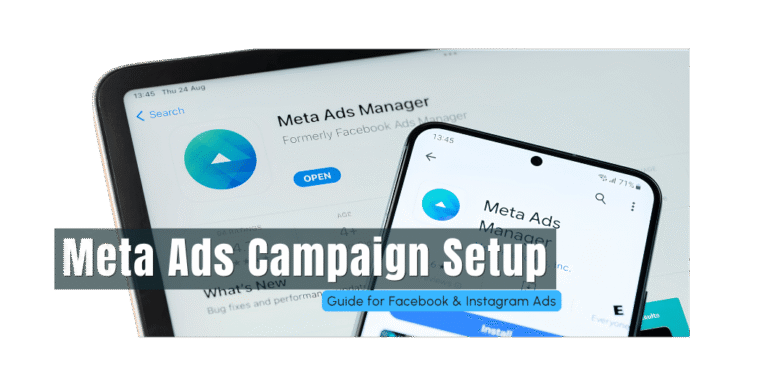
Read Also: Meta Ads Campaign Setup: Step-by-Step Guide
17. A 30-Day Facebook and Instagram Ads Testing Plan
Small businesses can use a structured monthly plan to identify promising advertising approaches.
The following is a planning framework, not a guarantee of results.
Week 1: Preparation
- Define your target customer.
- Select one primary campaign objective.
- Prepare a clear offer.
- Check your website or lead form.
- Verify conversion tracking where applicable.
- Create suitable Facebook and Instagram creative variations.
- Establish a budget and success criteria.
Week 2: Initial testing
- Launch the campaign with the chosen placement strategy.
- Monitor delivery and tracking.
- Check whether enquiries or purchases are being recorded correctly.
- Avoid making frequent changes based on small fluctuations.
- Record early observations.
Week 3: Performance review
- Compare available placement-level results.
- Evaluate qualified leads or purchases.
- Review landing page performance.
- Identify creative fatigue or audience limitations.
- Test a focused improvement where justified.
Week 4: Optimization
- Review the full test period.
- Identify the most promising audience and creative combinations.
- Evaluate customer acquisition costs and sales quality.
- Adjust budget cautiously.
- Document what you learned.
- Plan the next experiment.
End-of-month review checklist
Ask:
- Which placements delivered the most valuable results?
- Which creative generated the best qualified traffic?
- Which audience produced genuine customers?
- What was the cost per qualified lead or customer?
- Did the campaign generate profitable revenue?
- Were enquiries followed up promptly?
- What should be tested next?
If conversion volume is low, treat the results as preliminary rather than declaring a definitive winner.
18. Final Verdict: Facebook Ads or Instagram Ads?
The right choice depends on your business objective and customers—not simply on which platform is more popular.
Choose Facebook placements when your audience, offer, creative, and results make them a sensible fit. Choose Instagram placements when visual content and audience behaviour support your goals. Test both when you want to understand how the wider Meta advertising ecosystem can contribute to your results.
For many businesses, the most practical strategy is to start with a clear objective, test suitable placements, track meaningful conversions, and allocate spending based on reliable business outcomes.
For businesses in India, the process should also account for local language preferences, regional buying behaviour, service areas, mobile usability, and the speed of lead follow-up.
At NCSFORU.IN, a structured digital marketing strategy can combine Meta Ads, Google Ads, website optimization, SEO, and conversion tracking to support measurable business growth.
The key principle is simple: choose advertising placements based on evidence, and measure success by business value rather than vanity metrics.
Frequently Asked Questions
1. Which is better: Facebook Ads or Instagram Ads?
Neither platform is universally better. Facebook can be useful for local promotions, information-rich creative, and community-oriented campaigns, while Instagram can be particularly suitable for visual storytelling and short-form video. Test both where appropriate and compare actual business outcomes.
2. Are Facebook Ads cheaper than Instagram Ads?
Not always. Advertising costs depend on audience competition, location, campaign objective, creative quality, conversion rates, and other factors. Compare cost per qualified lead or customer rather than relying only on cost per click.
3. Can I run Facebook and Instagram Ads together?
Yes. Eligible Facebook and Instagram placements can be managed through Meta Ads Manager. You can use supported automatic or manual placement options depending on your campaign requirements.
4. Which platform is better for small businesses in India?
The best platform depends on your audience and business model. Local service providers, retailers, restaurants, dealerships, and online stores can test both platforms and evaluate the quality of enquiries and sales.
5. Are Instagram Ads better for e-commerce?
Instagram can be useful for visual product discovery, demonstrations, and lifestyle content. Facebook can also support e-commerce advertising. Product margins, website quality, audience behaviour, and purchase conversion rates matter more than assumptions about a single platform.
6. Which platform is better for lead generation?
Both can generate leads. Evaluate the number of qualified enquiries, conversion rate, cost per customer, and revenue rather than choosing a platform based only on the number of form submissions.
7. Should I use the same creative for both platforms?
You can test the same core message across both platforms, but creative should be adapted to the placement. Vertical video, square images, and different text layouts may be appropriate for different environments.
8. How much should a small business spend on Meta Ads?
There is no universal minimum budget that guarantees results. Set a budget based on your business goals, expected acquisition costs, conversion data, and ability to test campaigns responsibly. Begin with a manageable amount and increase spending only when results justify it.
9. Can I run Meta Ads without a website?
In some cases, yes. Depending on eligibility and setup, you may be able to use supported lead forms or messaging destinations. A website can still provide useful information, build trust, and support conversion tracking.
10. How long does it take to identify the better platform?
It depends on the budget, conversion volume, sales cycle, and quality of tracking. A short test may provide early clues, but low-volume campaigns can require longer observation. Avoid declaring a winner from a handful of clicks or leads.
Conclusion
Facebook Ads and Instagram Ads are both useful tools for businesses that want to reach potential customers online. The right strategy begins with understanding your audience, creating relevant advertising, selecting an appropriate objective, and measuring meaningful outcomes.
Rather than relying on assumptions, test suitable placements and review qualified leads, purchases, customer acquisition costs, and profitability.
When your advertising strategy is supported by a strong website, relevant content, accurate tracking, and timely customer follow-up, you can make better decisions about where your marketing budget should go.
Want to improve your digital advertising strategy? Explore the digital marketing services available through NCSFORU.IN and build a campaign around your business goals.