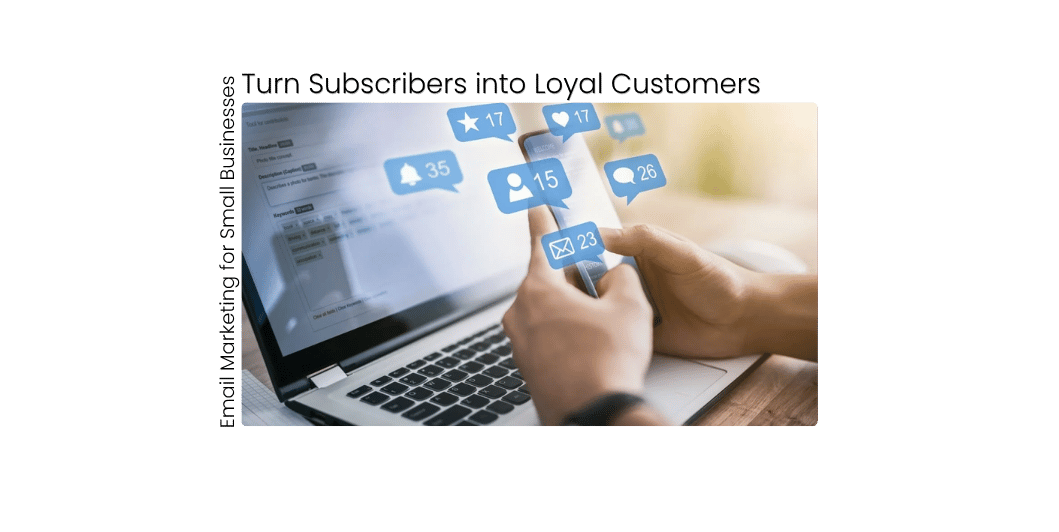
Email Marketing for Small Businesses: How to Turn Subscribers into Loyal Customers (2026)
Introduction
Imagine having a direct line of communication with your customers—one that isn’t controlled by changing social media algorithms or expensive advertising campaigns.
That’s exactly what email marketing offers.
While platforms like Facebook and Instagram are great for reaching new audiences, email marketing helps you build lasting relationships with people who have already shown interest in your business.
Whether you’re running an online store, a service business, or a local company, email marketing remains one of the highest-return digital marketing channels available.
In this guide, you’ll learn how to use email marketing to engage your audience, build trust, and increase sales.
Read Also: Digital Marketing for Small Businesses
What Is Email Marketing?
Email marketing is the practice of sending targeted emails to customers or subscribers to inform, educate, promote, or nurture relationships.
Businesses commonly use email to:
- Share newsletters
- Promote products and services
- Announce special offers
- Send appointment reminders
- Welcome new subscribers
- Educate customers
- Recover abandoned carts
Unlike social media, your email list is an asset that you own.
Why Email Marketing Matters
A strong email marketing strategy can help you:
- Build long-term customer relationships
- Increase repeat purchases
- Drive traffic to your website
- Generate qualified leads
- Promote new products and services
- Keep your audience engaged
It’s a reliable way to stay connected with customers over time.
Step 1: Build a Quality Email List
Never buy email lists.
Instead, encourage people to subscribe by offering something valuable, such as:
- Free eBooks
- Discount coupons
- Checklists
- Templates
- Exclusive content
- Newsletters
Growing your list organically results in higher engagement and better long-term results.
Read Also: Social Media Marketing for Small Businesses
Step 2: Choose the Right Email Platform
Popular email marketing platforms include:
- Mailchimp
- Brevo
- ConvertKit
- MailerLite
- ActiveCampaign
Look for features such as automation, segmentation, analytics, and easy-to-use templates.
Step 3: Segment Your Audience
Not every subscriber has the same interests.
Group your audience based on:
- New subscribers
- Existing customers
- Location
- Purchase history
- Interests
- Industry
Segmentation allows you to send more relevant and personalized emails.
Read Also: Why Branding Matters
Step 4: Write Engaging Subject Lines
Your subject line determines whether your email gets opened.
Good subject lines are:
- Short
- Clear
- Relevant
- Curiosity-driven
Examples:
- 5 Ways to Grow Your Business Online
- Your Exclusive Weekend Offer
- Ready to Improve Your Website?
Avoid misleading or overly promotional language.
Step 5: Create Valuable Email Content
Focus on providing value before asking for a sale.
Ideas include:
- Business tips
- Industry news
- Customer success stories
- Educational guides
- Product updates
- Seasonal offers
- Blog highlights
A helpful email builds trust over time.
Read Also: 15 AI Tools Every Small Business Should Use
Step 6: Use Automation
Email automation saves time while improving consistency.
Automate emails such as:
- Welcome series
- Birthday greetings
- Follow-up messages
- Order confirmations
- Feedback requests
- Re-engagement campaigns
Automation ensures customers receive timely communication without manual effort.
Step 7: Optimize for Mobile
Many people read emails on smartphones.
Make sure your emails:
- Use responsive templates
- Have readable fonts
- Include clear buttons
- Load quickly
- Keep paragraphs short
A mobile-friendly email improves the reader experience.
Step 8: Measure Performance
Track important metrics, including:
- Open rate
- Click-through rate (CTR)
- Conversion rate
- Unsubscribe rate
- Bounce rate
Review these regularly to improve future campaigns.
Common Email Marketing Mistakes
Avoid these common pitfalls:
- Buying email lists
- Sending too many emails
- Ignoring personalization
- Writing weak subject lines
- Not testing emails before sending
- Forgetting a clear call to action
- Using large image files that slow loading
Read Also: Google Business Profile Optimization
Email Marketing Checklist
Before sending an email, check that you have:
✅ A compelling subject line
✅ Personalized greeting (where appropriate)
✅ Valuable content
✅ Clear call to action
✅ Mobile-friendly design
✅ Working links
✅ Tested email formatting
✅ Performance tracking enabled
Frequently Asked Questions
Is email marketing still effective?
Yes. Email remains one of the most reliable ways to communicate directly with customers and nurture long-term relationships.
How often should I send emails?
The ideal frequency depends on your audience and content. A consistent schedule—such as weekly or twice a month—is often more effective than sending emails sporadically.
Can small businesses benefit from email marketing?
Absolutely. Email marketing is affordable, scalable, and suitable for businesses of all sizes.
What should I include in a newsletter?
Share helpful articles, company updates, new products, customer stories, special offers, or industry insights that are relevant to your subscribers.
Final Thoughts
Email marketing is more than a promotional tool—it’s a way to build trust, stay connected with your audience, and encourage repeat business.
By focusing on valuable content, thoughtful personalization, and consistent communication, you can turn casual subscribers into loyal customers and long-term advocates for your brand.
I very delighted to find this internet site on bing, just what I was searching for as well saved to fav
çok yararlı bir paylaşım olmuş teşekkür ederim çok işime yarıcak.
aramalarım sonunda buraya geldim ve kesinlikle işime yarayan bir makale oldu. teşekkür ederim
For the reason that the admin of this site is working, no uncertainty very quickly it will be renowned, due to its quality contents.
Bu konu hakkında bilgi vermeniz çok güzel. Genellikle türkçe içerikler az oluyor fakat böyle güzel içerikler görmek ve okumak çok zevkli.
There is definately a lot to find out about this subject. I like all the points you made
Good post! We will be linking to this particularly great post on our site. Keep up the great writing
This is really interesting, You’re a very skilled blogger. I’ve joined your feed and look forward to seeking more of your magnificent post. Also, I’ve shared your site in my social networks!
I like the efforts you have put in this, regards for all the great content.
I like the efforts you have put in this, regards for all the great content.
I am truly thankful to the owner of this web site who has shared this fantastic piece of writing at at this place.
I really like reading through a post that can make men and women think. Also, thank you for allowing me to comment!
çok başarılı ve kaliteli bir makale olmuş güzellik sırlarım olarak teşekkür ederiz.
sitenizi takip ediyorum makaleler Faydalı bilgiler için teşekkürler