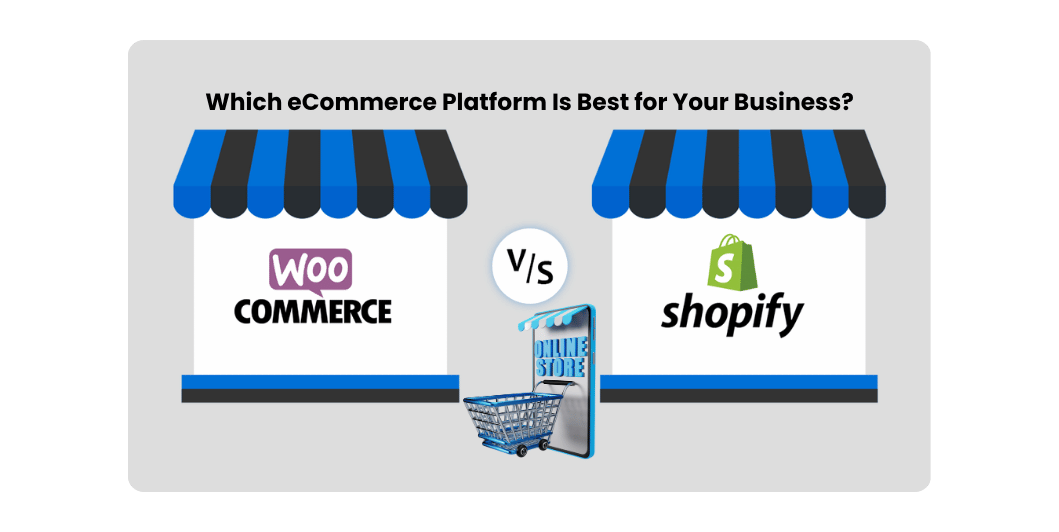
WooCommerce vs Shopify: Which eCommerce Platform Is Best for Your Business?
Introduction
If you’re planning to launch an online store, one of the first decisions you’ll face is choosing the right platform.
Two of the most popular options are WooCommerce and Shopify.
Both platforms can help you build a successful online business, but they work in different ways and are designed for different types of users.
WooCommerce gives you complete control over your website through WordPress, while Shopify provides a fully hosted solution with many technical tasks handled for you.
This guide compares both platforms to help you make an informed decision.
What Is WooCommerce?
WooCommerce is a free eCommerce plugin for WordPress that turns a standard website into a fully functional online store.
With WooCommerce, you have full ownership of your website and complete control over customization.
It is ideal for businesses that want flexibility and scalability.
What Is Shopify?
Shopify is a hosted eCommerce platform that allows businesses to create and manage online stores without handling web hosting or server maintenance.
It focuses on simplicity, making it popular among beginners who want to launch quickly.
Read Also: WooCommerce for Beginners
WooCommerce vs Shopify: Quick Comparison
| Feature | WooCommerce | Shopify |
|---|---|---|
| Hosting | Self-hosted | Hosted |
| Ease of Setup | ⭐⭐⭐⭐☆ | ⭐⭐⭐⭐⭐ |
| Customization | ⭐⭐⭐⭐⭐ | ⭐⭐⭐⭐☆ |
| SEO Flexibility | ⭐⭐⭐⭐⭐ | ⭐⭐⭐⭐☆ |
| Themes | Thousands | Large selection |
| Plugins/Apps | Extensive | Extensive |
| Ownership | Full control | Platform-managed |
| Scalability | Excellent | Excellent |
| Blogging | Excellent | Good |
| Learning Curve | Moderate | Easy |
Ease of Use
WooCommerce
WooCommerce requires:
- WordPress installation
- Hosting setup
- Plugin management
- Regular updates
Although it involves more initial setup, it offers greater flexibility.
Shopify
Shopify simplifies the process by managing:
- Hosting
- Security
- Software updates
- Technical maintenance
This allows beginners to focus on running their store.
Design and Customization
WooCommerce
WooCommerce offers nearly unlimited customization.
You can modify:
- Layouts
- Product pages
- Checkout process
- Theme files
- Plugins
- Custom code
Developers appreciate this level of flexibility.
Shopify
Shopify offers attractive themes and customization options, but deeper changes may require working within Shopify’s platform and tools.
For many businesses, the available customization is more than sufficient.
SEO Comparison
SEO is essential for long-term organic growth.
WooCommerce
Advantages include:
- Complete control over URLs
- Flexible metadata
- Advanced SEO plugins
- Schema support
- Full blogging capabilities
Read Also: How to Start an E-Commerce Business
Shopify
Shopify includes solid built-in SEO features and supports optimization, though some aspects of URL structure and customization are more fixed compared to WooCommerce.
Performance
Both platforms can deliver fast websites.
WooCommerce
Performance depends on:
- Hosting quality
- Theme selection
- Plugin optimization
- Caching
- Image optimization
Shopify
Performance optimization is largely handled by Shopify, making it easier for users without technical experience.
Security
WooCommerce
Website owners are responsible for:
- Updates
- Security plugins
- Backups
- SSL certificates
- Hosting security
Shopify
Shopify manages much of the platform’s security, including infrastructure updates and SSL for hosted stores.
Store owners still need to follow good account security practices.
Payment Options
Both platforms support multiple payment gateways.
WooCommerce offers extensive flexibility through plugins, while Shopify provides a streamlined payment setup and supports many third-party providers.
Choose based on your preferred payment methods and business requirements.
Cost Comparison
WooCommerce
Costs may include:
- Domain name
- Hosting
- Premium theme (optional)
- Premium plugins (optional)
The software itself is free.
Shopify
Shopify uses subscription-based pricing.
Additional costs may apply depending on your chosen plan, premium themes, apps, and payment processing.
Review the latest pricing before making a decision.
Pros and Cons
WooCommerce Pros
- Full ownership
- Highly customizable
- Excellent SEO potential
- Huge plugin ecosystem
- Strong blogging capabilities
WooCommerce Cons
- Requires more technical management
- Performance depends on hosting and optimization
- Maintenance is your responsibility
Shopify Pros
- Easy setup
- Managed hosting
- Built-in security
- Reliable infrastructure
- Beginner-friendly
Shopify Cons
- Ongoing subscription costs
- Less control over the platform
- Some advanced features may require paid apps
Which Platform Should You Choose?
Read Also: Conversion Rate Optimization (CRO)
Choose WooCommerce if:
- You already use WordPress
- SEO is a major priority
- You want complete control
- You need advanced customization
- You plan to grow a content-rich website
Choose Shopify if:
- You want a faster setup
- You prefer minimal technical management
- You want hosting included
- You value simplicity and convenience
Frequently Asked Questions
Is WooCommerce free?
Yes. WooCommerce is free software, but you’ll typically pay for hosting, a domain name, and any premium extensions you choose.
Is Shopify easier for beginners?
Many beginners find Shopify easier because hosting, updates, and much of the technical maintenance are handled for them.
Which platform is better for SEO?
Both platforms can perform well in search engines. WooCommerce generally offers greater flexibility for advanced SEO customization, while Shopify provides strong built-in SEO features.
Can I migrate from Shopify to WooCommerce?
Yes. Migration is possible, though the process requires planning to preserve products, customer data, URLs where possible, and SEO value.
Final Thoughts
There isn’t a universal winner between WooCommerce and Shopify.
The best choice depends on your business goals, technical comfort level, budget, and long-term plans.
If you want complete control, extensive customization, and deep integration with WordPress, WooCommerce is an excellent choice.
If you prefer a platform that minimizes technical responsibilities and lets you get started quickly, Shopify is a strong option.
Before making your decision, think about how you expect your business to grow over the next few years. Choosing the right platform today can save significant time and effort later.



2 Comments