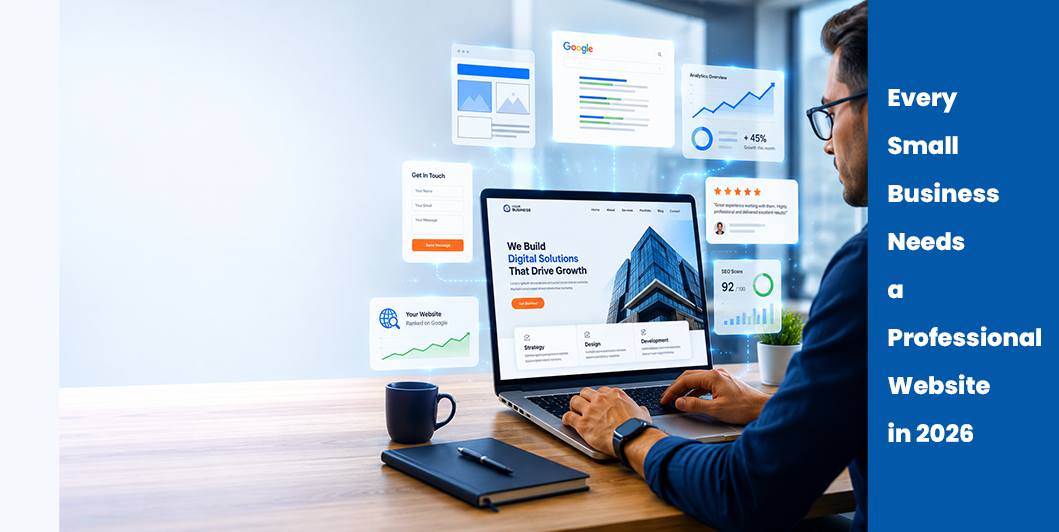
10 Reasons Every Small Business Needs a Professional Website in 2026
Introduction
Imagine a customer hears about your business and immediately searches for it online. Instead of finding a professional website, they only see a social media page—or worse, nothing at all.
What impression does that create?
In today’s digital world, your website is often the first interaction customers have with your brand. A professional website isn’t just an online brochure—it’s your digital storefront, salesperson, customer support representative, and marketing tool, all working around the clock.
Whether you run a local shop, restaurant, startup, consultancy, or service business, a website is no longer optional—it’s essential.
Let’s explore why.
1. Your Website Builds Trust
Customers are more likely to trust businesses with a professional website.
A well-designed website demonstrates that you are:
- Legitimate
- Professional
- Reliable
- Established
Include testimonials, reviews, certifications, and case studies to build even more credibility.
2. Your Business Is Open 24/7
Unlike a physical store, your website never closes.
Potential customers can:
- Learn about your services
- Browse products
- Request quotes
- Book appointments
- Contact you
At any time—even outside business hours.
3. Reach More Customers
People search online before making purchasing decisions.
With a website, you can attract visitors through:
- Google Search
- Social media
- Email marketing
- Online ads
- Referrals
A website expands your reach far beyond your local area.
4. Improve Your Google Rankings
Search engines rank websites—not social media profiles.
By publishing helpful content and optimizing your pages for SEO, you increase your chances of appearing in Google search results.
The more useful your website is, the more opportunities you have to attract organic traffic.
5. Generate More Leads
A website can turn visitors into customers.
Include:
- Contact forms
- Call-to-action buttons
- Live chat
- Quote request forms
- Newsletter signup
These features make it easy for potential customers to take the next step.
6. Showcase Your Products and Services
Your website lets you present your offerings professionally.
Use:
- High-quality images
- Detailed descriptions
- Pricing (if appropriate)
- Customer success stories
- Frequently Asked Questions
This helps visitors make informed decisions.
7. Strengthen Your Brand
A professional website allows you to create a consistent brand identity through:
- Logo
- Colors
- Typography
- Messaging
- Tone of voice
Unlike social media, your website gives you complete control over your brand experience.
8. Gain Valuable Customer Insights
Tools like Google Analytics help you understand:
- How visitors find your website
- Which pages are most popular
- How long people stay
- Which devices they use
- Where they leave your site
These insights help you improve your marketing strategy.
9. Stay Ahead of Competitors
If your competitors have professional websites and you don’t, you’re already at a disadvantage.
A modern website helps you:
- Stand out
- Demonstrate expertise
- Build trust
- Capture leads before your competitors do
Investing in your online presence today can provide long-term advantages.
10. Support Every Marketing Campaign
Every digital marketing activity should direct users back to your website.
Your website supports:
- SEO
- Google Ads
- Meta Ads
- Email campaigns
- WhatsApp marketing
- Social media
- Content marketing
Think of your website as the central hub for all your online marketing efforts.
Essential Features Every Business Website Should Have
A successful business website should include:
- Mobile-friendly design
- Fast loading speed
- HTTPS security
- Clear navigation
- Contact page
- About page
- Service or product pages
- Blog section
- Testimonials
- Strong calls to action
These features improve both user experience and search engine visibility.
Common Mistakes to Avoid
Many businesses make avoidable mistakes, such as:
- Using outdated designs
- Ignoring mobile optimization
- Slow loading pages
- Missing contact information
- Poor-quality images
- No clear calls to action
- Neglecting SEO
Regular updates and maintenance help keep your website effective.
Frequently Asked Questions
Do I need a website if I have social media?
Yes. Social media platforms are valuable, but you don’t control them. Your website is your own digital asset and provides greater flexibility, credibility, and visibility in search engines.
How much does a business website cost?
Costs vary depending on the features and complexity. A simple informational website is more affordable than a custom e-commerce platform.
Can I update my website myself?
Yes. Platforms like WordPress allow you to update content, publish blog posts, and manage pages without advanced technical knowledge.
How often should I update my website?
Review your content regularly and update important pages whenever your services, pricing, contact details, or business information changes.
Read Also: The Ultimate Digital Growth Guide for Small Businesses (2026)
Final Thoughts
A professional website is one of the smartest investments a small business can make. It helps you build trust, attract customers, generate leads, and support every aspect of your digital marketing strategy.
In an increasingly competitive online environment, businesses with fast, user-friendly, and informative websites are better positioned for long-term success.
If your business doesn’t yet have a professional website—or your current one needs improvement—there’s no better time to start than now.



8 Comments