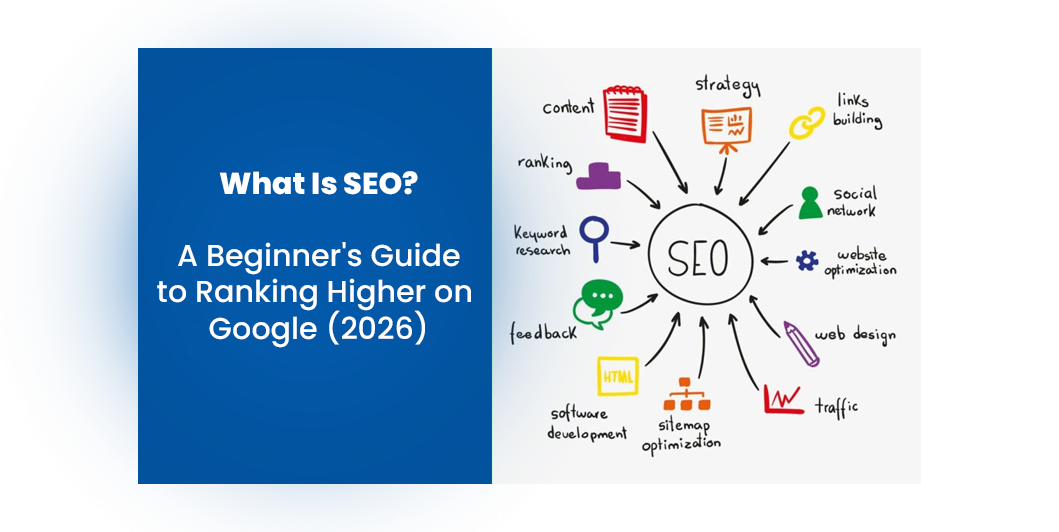
What Is SEO? A Beginner’s Guide to Ranking Higher on Google
Introduction: What Is Search Engine Optimization
Imagine opening a shop in the busiest market in your city—but it’s hidden down a narrow alley where no one can find it. No matter how great your products or services are, you’ll struggle to attract customers.
The same thing happens with websites.
Every day, billions of searches are performed on Google. If your website doesn’t appear in search results, potential customers may never discover your business.
This is where Search Engine Optimization (SEO) comes in.
SEO is one of the most effective digital marketing strategies because it helps your website appear higher in search results, bringing in consistent, high-quality traffic without paying for every click.
In this guide, you’ll learn what SEO is, how it works, why it’s important, and how to get started.
What Is SEO?
SEO (Search Engine Optimization) is the process of improving your website so that search engines like Google can better understand your content and display it to people searching for relevant information.
The goal of SEO is simple:
- Increase organic traffic
- Improve search rankings
- Attract qualified visitors
- Generate leads and sales
Unlike paid advertising, SEO focuses on earning visibility naturally over time.
How Does Google Work?
Google follows three major steps:
1. Crawling
Google’s bots visit websites and discover new pages.
2. Indexing
The discovered pages are stored in Google’s database.
3. Ranking
Google decides which pages deserve to appear first based on relevance, quality, and user experience.
Your goal is to help Google understand that your page is the best answer to a user’s search.
Why Is SEO Important?
SEO offers several long-term benefits:
- Drives free, organic traffic
- Builds trust and credibility
- Improves brand awareness
- Generates consistent leads
- Delivers long-term ROI
- Supports every stage of the customer journey
For small businesses, SEO can be one of the most cost-effective marketing investments.
Types of SEO
Read Also: The Ultimate Digital Growth Guide for Small Businesses (2026)
1. On-Page SEO
On-page SEO focuses on optimizing individual pages.
This includes:
- Title tags
- Meta descriptions
- Headings (H1, H2, H3)
- Keyword placement
- Image optimization
- Internal linking
- High-quality content
2. Off-Page SEO
Off-page SEO helps build your website’s authority.
Examples include:
- Backlinks
- Guest blogging
- Brand mentions
- Social sharing
- Digital PR
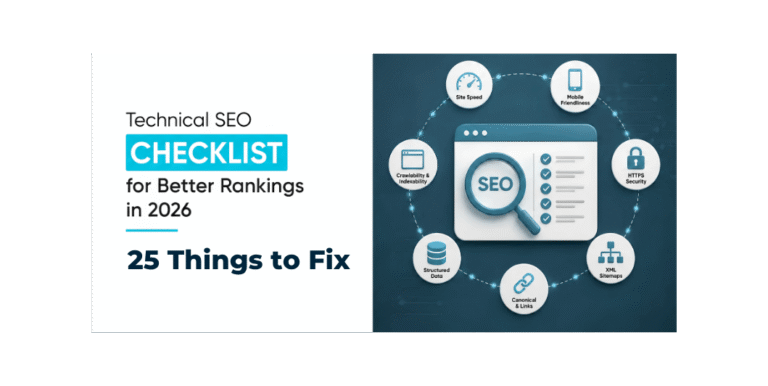
3. Technical SEO
Technical SEO ensures your website is easy for search engines to crawl and index.
Key factors include:
- Fast loading speed
- Mobile responsiveness
- HTTPS security
- XML sitemap
- Robots.txt
- Structured data (Schema)
- Clean URL structure
4. Local SEO
If your business serves a local area, Local SEO helps customers find you.
Optimize:
- Google Business Profile
- Local keywords
- Customer reviews
- NAP (Name, Address, Phone) consistency
- Local citations
How Search Engines Rank Websites
Google evaluates hundreds of ranking factors, including:
- Content quality
- Relevance
- Page speed
- Mobile experience
- User engagement
- Backlinks
- Website authority
- Search intent
- Freshness of content
The best-performing pages solve the user’s problem clearly and completely.
Keyword Research
Keywords are the words and phrases people type into Google.
For example:
- What is SEO?
- Best SEO tools
- SEO for small businesses
- Local SEO guide
Choose keywords with a balance of search volume and achievable competition.
Write Helpful Content
Google rewards content that is useful, accurate, and easy to understand.
When writing:
- Focus on one main topic.
- Use clear headings.
- Include examples.
- Answer common questions.
- Keep content updated.
Avoid keyword stuffing. Write naturally for readers first.
Common SEO Mistakes
Avoid these mistakes:
- Publishing thin content
- Ignoring mobile users
- Slow-loading pages
- Missing meta descriptions
- Broken links
- Duplicate content
- Poor internal linking
- Using irrelevant keywords
Beginner SEO Checklist
✔ Use one primary keyword.
✔ Write a compelling title.
✔ Add a meta description.
✔ Optimize images.
✔ Link to related articles.
✔ Use descriptive headings.
✔ Improve page speed.
✔ Make your site mobile-friendly.
✔ Submit your sitemap to Google.
✔ Update old content regularly.
Frequently Asked Questions
Is SEO free?
Yes. Organic SEO doesn’t require paying Google for clicks, although it does require time, strategy, and consistent effort.
How long does SEO take?
Most websites begin seeing noticeable improvements within 3 to 6 months, depending on competition, content quality, and website authority.
Can I do SEO myself?
Absolutely. Beginners can learn the fundamentals and implement many best practices, while larger businesses may choose to work with SEO professionals for advanced strategies.
Is SEO better than paid advertising?
SEO and paid ads serve different purposes. Ads can deliver immediate visibility, while SEO builds sustainable, long-term organic traffic. Using both together often provides the best results.
Final Thoughts
SEO is not about tricking search engines—it’s about creating valuable content, delivering a great user experience, and making it easy for both people and search engines to understand your website.
If you’re just starting your digital journey, learning SEO is one of the smartest investments you can make. The earlier you begin, the stronger your online presence will become over time.
At NCSFORU Blog, we’ll continue publishing practical guides to help entrepreneurs, marketers, and business owners grow their online presence with confidence.
If you found this guide helpful, explore our Ultimate Digital Growth Guide for Small Businesses to learn how SEO fits into a complete digital growth strategy.
3 Comments