
SEO vs Google Ads: Which Is Better for Small Businesses in 2026?
Introduction
If you run a small business, getting customers from Google can be one of the most effective ways to grow.
But there is an important question:
Should you invest in SEO or Google Ads?
Both can help your business appear in Google search results, but they work very differently.
SEO (Search Engine Optimization) focuses on improving your website and online presence so that your pages can earn organic visibility in search results.
Google Ads is a paid advertising system where businesses bid for opportunities to show ads to people searching for relevant products and services.
So which one is better?
The answer isn’t simply SEO or Google Ads.
For many small businesses, the better question is:
Which channel should I prioritize based on my goals, budget, competition, and timeline?
In this guide, we’ll compare SEO vs Google Ads in detail and explain when each approach makes sense in 2026.
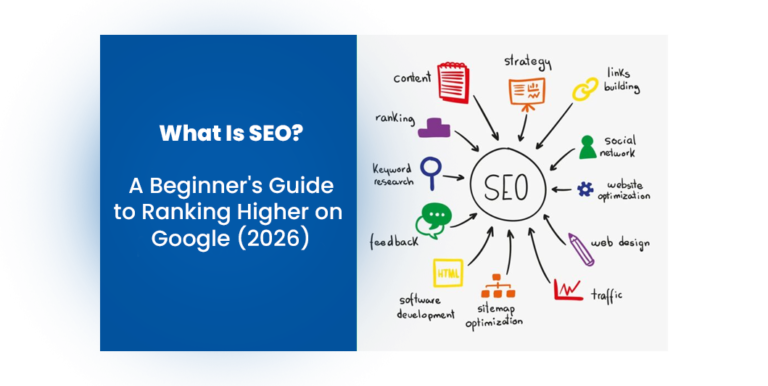
Read Also: What Is SEO? A Beginner’s Guide to Ranking Higher on Google
SEO vs Google Ads: Quick Comparison
| Factor | SEO | Google Ads |
|---|---|---|
| Traffic type | Organic | Paid |
| Initial speed | Usually slower | Usually faster |
| Long-term value | High potential | Depends on continued spending |
| Cost model | Investment in content, website & optimization | Pay for advertising clicks/actions depending on campaign |
| Targeting | Based heavily on relevance and search intent | Extensive audience, keyword, location and campaign targeting |
| Results after stopping spend | Organic visibility may continue | Ads generally stop when campaigns stop serving |
| Brand credibility | Can build organic visibility | Strong visibility, but clearly identified as an ad |
| Local businesses | Excellent | Excellent |
| eCommerce | Excellent | Excellent |
| Best for | Sustainable organic growth | Immediate or highly targeted demand capture |
| Main challenge | Takes time and consistent work | Can become expensive without careful management |
Important: SEO does not guarantee rankings, and Google Ads does not guarantee profitability. Both require proper strategy, measurement and optimization.
What Is SEO?
SEO stands for Search Engine Optimization.
It involves improving your website and content so search engines can better understand your pages and users can discover useful information through organic search.
SEO can include:
- Keyword research
- Helpful content
- On-page optimization
- Technical SEO
- Internal linking
- Website speed optimization
- Mobile usability
- Local SEO
- Structured data
- Digital PR and link earning
- Updating outdated content
For example, suppose you own a digital marketing agency in Kolkata.
You might create useful pages targeting searches such as:
- Digital marketing agency in Kolkata
- SEO services for small businesses
- Website development company
- Local SEO services
- Google Business Profile optimization
If your pages become competitive for relevant searches, they can generate organic traffic without paying Google for every click.
However, SEO normally requires time, consistency and ongoing optimization.
What Is Google Ads?
Google Ads is Google’s paid advertising platform.
Businesses can create campaigns that may appear when users search for relevant products or services, depending on the campaign type, targeting, bidding, eligibility and auction dynamics.
For example, a business selling website development services could advertise for searches related to:
“website development company near me”
A user may see a sponsored result near the top of the search results.
When someone clicks the advertisement, the advertiser may pay according to the campaign’s bidding and billing model.
Google Ads can be useful when you need to generate qualified traffic relatively quickly.
But paid traffic has an important limitation:
You generally need an ongoing advertising budget to keep buying that traffic.
SEO vs Google Ads: The Biggest Difference
The simplest way to understand the difference is:
SEO builds organic visibility.
Google Ads buys advertising visibility.
Think of SEO as building a long-term asset.
Think of Google Ads as renting targeted advertising space.
Neither is automatically better.
Your choice depends on what your business needs.
1. SEO vs Google Ads: Speed of Results
This is one of the biggest differences.
Google Ads
Google Ads can potentially start generating impressions and clicks shortly after a campaign becomes eligible to serve.
That makes it useful for:
- New product launches
- Seasonal promotions
- Limited-time offers
- Lead generation
- Local services
- Testing demand
- Urgent customer acquisition
However, launching quickly does not mean you’ll automatically get profitable results.
Campaigns need:
- Appropriate targeting
- Relevant keywords
- Good advertisements
- Strong landing pages
- Conversion tracking
- Budget control
- Continuous optimization
SEO
SEO generally takes longer.
A new website may need time to be crawled, indexed, evaluated and become competitive for search queries.
Even after publishing excellent content, ranking performance isn’t guaranteed.
That’s why SEO should be treated as a long-term growth strategy rather than an overnight traffic solution.
Winner for speed: Google Ads
Winner for long-term organic visibility: SEO
Read Also: Keyword Research for SEO: How to Find Keywords That Drive Real Traffic
2. SEO vs Google Ads: Cost
Cost is more complicated than simply saying:
SEO is free and Google Ads is paid.
That’s not accurate.
Google Ads costs
With Google Ads, your costs can include:
- Advertising clicks or other billed interactions
- Campaign management
- Landing page development
- Creative production
- Conversion tracking
- Agency or freelancer fees
The actual cost varies considerably by industry, location, competition, keywords, campaign quality and other factors.
Some highly competitive commercial searches can be expensive.
SEO costs
SEO may involve:
- SEO strategy
- Content creation
- Website development
- Technical SEO
- Keyword research
- Link earning or digital PR
- Local SEO
- SEO tools
- Agency or freelancer fees
So SEO isn’t really “free.”
You’re investing resources into building organic visibility.
Important difference
With Google Ads, you pay to participate in paid advertising.
With SEO, you’re investing in improving your website and content to compete for organic visibility.
3. Which Has Better ROI?
There is no universal answer.
ROI depends on:
Revenue generated − marketing cost
But calculating this requires reliable conversion tracking.
For example, imagine two businesses.
Business A
Spends ₹30,000 on Google Ads and generates ₹80,000 in attributable profit.
Business B
Spends ₹30,000 on SEO and content but sees limited revenue during the first few months.
Business B may still be building an organic asset that produces traffic later.
This is why comparing SEO and Google Ads using only one month’s revenue can be misleading.
SEO often needs to be evaluated over a longer period.
Google Ads can be evaluated more directly through campaign-level metrics such as:
- Cost per click
- Conversion rate
- Cost per lead
- Cost per acquisition
- Revenue
- Return on ad spend
4. SEO vs Google Ads for Local Businesses
Local businesses can benefit from both.
Imagine you operate:
- A dental clinic
- A restaurant
- A bike showroom
- A real estate agency
- A salon
- An accounting firm
- A home service company
- A digital marketing agency
SEO can help you build local visibility through:
- Location-focused service pages
- Helpful local content
- Google Business Profile
- Reviews
- Local citations
- Internal linking
- Relevant backlinks
- Strong location information
Google Ads can help you target relevant searches and locations through paid campaigns.
Example
A Kolkata-based web development company could use SEO to build pages around relevant services and locations while simultaneously using Google Ads to test high-intent search demand.
This combination can provide both short-term acquisition opportunities and long-term organic growth.
For more information, see our guide to Local SEO for Small Businesses and Google Business Profile.
5. SEO vs Google Ads for eCommerce
eCommerce businesses can also benefit from both approaches.
SEO can help with:
- Product pages
- Category pages
- Buying guides
- Comparison content
- Informational searches
- Long-tail keywords
- Organic product discovery
Google Ads can help with:
- Product promotion
- High-intent searches
- Remarketing strategies
- Seasonal campaigns
- New product launches
- Demand testing
For WooCommerce businesses, SEO should not be limited to blog posts.
Your:
- Product titles
- Product descriptions
- Categories
- URLs
- Images
- Internal links
- Technical setup
can all contribute to your organic search strategy.
You can also read our WooCommerce SEO guide for a deeper look at eCommerce search optimization.
6. Which Builds More Long-Term Value?
This is where SEO has a major advantage.
Suppose you publish a genuinely useful article today.
It may continue attracting organic visitors months later if it remains relevant and competitive.
You can improve it over time by:
- Updating information
- Adding examples
- Improving internal links
- Expanding useful sections
- Improving search intent alignment
- Fixing technical problems
Google Ads is different.
If you stop your campaigns, you generally stop buying that paid traffic.
That doesn’t make Google Ads bad.
It simply means the two channels have different economics.
SEO = build an organic asset
Google Ads = purchase targeted advertising exposure
7. SEO vs Google Ads for New Businesses
New businesses often face a difficult situation.
You need customers now, but SEO may take time.
A practical approach can be:
Phase 1: Build the foundation
Set up:
- Professional website
- Google Business Profile where eligible
- Analytics
- Search Console
- Conversion tracking
- Strong service/product pages
Phase 2: Start targeted advertising
Use Google Ads selectively for high-intent searches where your offer and landing page are strong.
Phase 3: Build SEO
Create useful content and optimize important commercial pages.
Phase 4: Analyze the data
Look at which:
- Keywords
- Products
- Services
- Locations
- Landing pages
are generating meaningful engagement and conversions.
Use these insights to improve both paid and organic strategies.
8. SEO vs Google Ads: Trust and Visibility
Many users naturally distinguish between advertisements and organic results.
Organic search visibility can help businesses build credibility over time, particularly when the content genuinely answers users’ questions.
Google Ads gives you prominent paid visibility, but the placement is clearly part of an advertising system.
A strong strategy shouldn’t rely on visibility alone.
Your website still needs:
- Clear information
- Competitive offers
- Good UX
- Trust signals
- Reviews where appropriate
- Strong calls to action
- Transparent contact information
Getting the click is only the beginning.
9. SEO vs Google Ads: Targeting
Google Ads provides sophisticated campaign targeting capabilities.
Depending on campaign type and setup, advertisers can work with factors such as:
- Keywords
- Geographic areas
- Audiences
- Devices
- Budgets
- Scheduling
- Campaign objectives
SEO targeting works differently.
You target search intent through:
- Topics
- Keywords
- Content
- Website structure
- Location relevance
- Search intent
- User needs
For example, a blog article may target someone looking for:
“How much does a business website cost in India?”
A service page might target:
“business website development company.”
Understanding the difference between informational and commercial intent is critical.
10. SEO vs Google Ads for Small Budgets
Suppose you have a limited marketing budget.
Should you spend everything on SEO?
Not necessarily.
Should you spend everything on Google Ads?
Also not necessarily.
Instead, consider your business situation.
If you need leads immediately
Consider allocating a portion of the budget to carefully targeted Google Ads.
If you have a longer growth horizon
Invest consistently in SEO and content.
If you need both
Use a combination.
For example:
40% Google Ads + 60% SEO
could be a starting framework for one business, while another might reasonably use a completely different split.
There is no universal percentage.
The right allocation depends on:
- Customer lifetime value
- Competition
- Conversion rate
- Available budget
- Sales cycle
- Search demand
- Business margins
- Geographic market
Read Also: Google Business Profile: The Complete Guide for Small Businesses
11. Use Google Ads to Test SEO Opportunities
One interesting strategy is to use paid search data to inform your SEO strategy.
Suppose your Google Ads campaign shows that users searching for a particular service generate strong leads.
That information can help you identify a potentially valuable SEO opportunity.
You can then create or improve an organic landing page around that search intent.
This doesn’t mean paid search automatically makes a keyword rank organically.
Instead, the campaign can provide useful business and customer insights.
12. Use SEO Data to Improve Google Ads
The reverse can also work.
Your SEO research may reveal:
- High-intent keywords
- Customer questions
- Location-specific searches
- Product categories
- Content gaps
Some of these insights may help shape paid campaigns.
This is why SEO and PPC should not always be treated as completely separate departments.
They can inform each other.
13. Common SEO Mistakes
Small businesses often make these mistakes:
1. Expecting instant rankings
SEO generally takes time.
2. Publishing low-quality articles
More content isn’t automatically better.
3. Keyword stuffing
Repeating keywords unnaturally can damage readability and isn’t a sound SEO strategy.
4. Ignoring technical SEO
Slow pages, indexing issues and poor website architecture can create problems.
5. Creating pages without understanding search intent
A page must actually satisfy what the searcher is trying to accomplish.
6. Never updating old content
Some information becomes outdated quickly.
7. Ignoring internal links
Related pages should be connected logically.
Our SEO Audit for Small Businesses guide can help you identify many of these issues.
14. Common Google Ads Mistakes
Google Ads can also go wrong.
1. Targeting overly broad searches
Broad targeting can waste budget if the traffic isn’t relevant.
2. Sending every visitor to the homepage
A dedicated landing page can often provide a more focused experience.
3. Not tracking conversions
Without conversion data, optimization becomes much harder.
4. Ignoring search terms
Actual search queries can reveal irrelevant traffic and new opportunities.
5. Focusing only on clicks
Clicks are not the final business objective.
Leads, sales and qualified customers matter more.
6. Using weak landing pages
Even a well-targeted advertisement can’t compensate for a poor user experience.
7. Assuming more budget automatically means more profit
Increasing spend doesn’t guarantee proportional increases in profitable conversions.
15. SEO vs Google Ads: Which Is Better?
Here’s a simple decision framework.
Choose SEO if:
- You want long-term organic growth.
- You can wait for results.
- You want to build an owned content asset.
- Your business has valuable informational search opportunities.
- You want to reduce dependence on paid acquisition over time.
- You can consistently invest in content and website optimization.
Choose Google Ads if:
- You need targeted traffic quickly.
- You have a strong commercial offer.
- Your margins support paid acquisition.
- You can track conversions.
- You want to test search demand.
- You have seasonal or time-sensitive promotions.
Consider both if:
- You need short-term and long-term growth.
- Your industry is competitive.
- You want to diversify acquisition channels.
- You have enough resources to manage both properly.
SEO vs Google Ads: A Practical Decision Matrix
| Business Situation | Recommended Focus |
|---|---|
| Brand-new business needing immediate leads | Google Ads + SEO foundation |
| Established business with limited organic visibility | SEO |
| Seasonal promotion | Google Ads |
| Local service business | SEO + Google Ads |
| eCommerce store | SEO + Google Ads |
| Content-heavy business | SEO |
| Highly competitive commercial keywords | SEO + carefully managed Ads |
| Limited budget and long-term horizon | SEO |
| Need to test a new offer | Google Ads |
| Strong existing organic traffic | Optimize SEO + use Ads selectively |
Read Also: Local SEO for Small Businesses: 15 Proven Ways to Get More Local Customers
The Best Strategy for Many Small Businesses in 2026
For many businesses, the most practical strategy isn’t choosing one channel forever.
It’s creating a combined search marketing strategy.
Step 1: Build a strong website
Your website is the foundation.
Step 2: Fix technical SEO
Make sure search engines and users can properly access important pages.
Step 3: Research keywords
Understand what your customers are searching for.
Read our Keyword Research for SEO guide for more information.
Step 4: Build useful content
Create content around genuine customer questions and commercial needs.
Step 5: Launch carefully targeted Google Ads
Start with campaigns where the customer intent is strong and conversion tracking works.
Step 6: Measure everything
Track:
- Traffic
- Leads
- Sales
- Conversion rate
- Cost per lead
- Customer acquisition cost
- Revenue
- Organic performance
Step 7: Reallocate your budget
Invest more in channels and campaigns that produce meaningful business outcomes—not simply the highest number of clicks.
SEO + Google Ads: An Example
Imagine a Kolkata-based business website agency.
It could use:
SEO
Publish content such as:
- Business website cost in India
- WordPress vs custom website
- Website hosting guide
- Website speed optimization
- SEO audit guide
Google Ads
Run carefully targeted campaigns around commercial services such as:
- Business website development
- WordPress development
- eCommerce website development
- Website redesign
The SEO content attracts people researching their options.
The paid campaigns target people who are further along in the buying journey.
This creates multiple opportunities to reach potential customers.
What Should You Measure?
Don’t judge SEO or Google Ads solely by traffic.
Measure business outcomes.
SEO metrics
Track:
- Organic clicks
- Organic impressions
- Search queries
- Click-through rate
- Indexed pages
- Organic conversions
- Leads
- Revenue where measurable
- Landing-page performance
Google Ads metrics
Track:
- Impressions
- Clicks
- Click-through rate
- Cost
- Conversion rate
- Cost per conversion
- Qualified leads
- Revenue
- Return on ad spend where appropriate
The most important metric is ultimately:
How much valuable business are you generating from the money and resources invested?
Read Also: How Much Does a Business Website Cost
Frequently Asked Questions
Is SEO better than Google Ads?
Not universally. SEO can be better for long-term organic growth, while Google Ads can be useful when you need targeted traffic more quickly. Many businesses benefit from using both.
Is SEO free?
No. Although you don’t normally pay Google for each organic click, SEO requires investment in strategy, content, technical improvements, tools and/or professional services.
Is Google Ads better for a new business?
It can be useful for generating targeted traffic relatively quickly, but only when campaigns are properly structured and conversion economics make sense. A new business should also build its website and organic search foundation.
How long does SEO take?
There is no guaranteed timeline. Results depend on factors such as competition, website quality, content quality, technical health, authority and search demand.
Can I stop Google Ads after getting SEO traffic?
Potentially, but it depends on your business. If organic traffic provides enough qualified customers, you may reduce paid advertising. However, paid campaigns can still be useful for specific products, services, locations and promotions.
Should small businesses use SEO and Google Ads together?
Often, yes. SEO can support long-term organic visibility while Google Ads can provide paid opportunities for targeted searches. The right combination depends on your budget and business objectives.
Which is cheaper: SEO or Google Ads?
There isn’t a universal answer. Google Ads has direct advertising costs, while SEO requires ongoing investment in content, website optimization and strategy. Compare both based on cost per qualified customer and business value, not just upfront cost.
Can Google Ads improve my organic rankings?
Buying Google Ads does not mean Google will give your website higher organic rankings. Paid search and organic search are different systems.
Final Verdict: SEO vs Google Ads
So, SEO vs Google Ads—which is better for small businesses in 2026?
The answer depends on your goals.
Choose SEO when you’re building long-term organic visibility.
Choose Google Ads when you need targeted paid traffic and have a viable acquisition model.
Use both when you want to combine immediate opportunities with long-term growth.
For many small businesses, the strongest strategy is not:
SEO OR Google Ads
but:
SEO + Google Ads + a strong website + conversion optimization + consistent measurement.
Your website, content and advertising should work together rather than operate as isolated marketing activities.
And remember: traffic is not the goal. Profitable business growth is.

One Comment